There are no products in your shopping cart.
| 0 Items | £0.00 |

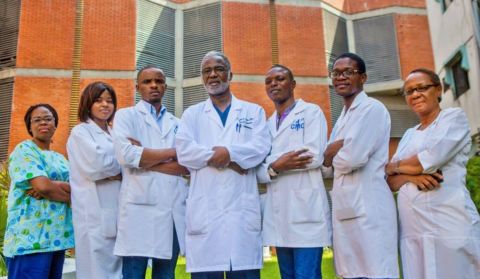
NIGERIA'S federal government has announced plans to address the 340,000 shortfall of medical doctors precipitated by the incessant migration of practitioners to lucrative markets like the UK by opening an Armed Forces College of Medicine and Health Sciences.
Amid a severe crisis in the Nigerian health sector, more and more doctors are leaving for abroad, with the UK among their top destinations. For instance, Britain's General Medical Council (GMC) which licenses and maintains the official register of medical practitioners in the UK, licensed at least 266 Nigerian doctors in two months during the course of June and July 2022 alone.
Other popular destinations for Nigeria-trained doctors include the US, Canada, Qatar, Saudi Arabia and Australia. Since the Covid-19 pandemic, the global demand for Nigerian doctors has grown incessantly, leading to the current shortfall, which has now prompted the federal government to take action.
Yesterday, at a meeting involving the education minister Maruf Alausa, the minister of state for education Suiwaba Ahmed and the defence minister Christopher Musa, a decision was taken to open an armed forces health facility to train doctors. According to Federal Ministry of Education spokesperson Folasade Boriowo, Nigeria’s population has exceeded 240m, and only 189 medical professionals are currently serving within the armed forces.
She added: “While the nation’s population exceeds 240m, only 189 medical professionals currently serve within the defence forces. Nigeria has a broader deficit of approximately 340,000 doctors, so there is an urgent need for scalable and innovative training models.
"This proposed Armed Forces College of Medicine and Health Sciences is designed as a strategic national intervention to strengthen military healthcare services, address critical manpower shortages within the armed forces and expand Nigeria’s overall medical training capacity. It will further position Nigeria as a regional hub for military medical training in West Africa.”
As part of broader reforms, the Nigerian government said it has increased annual medical school admissions from about 5,000 to nearly 10,000, with projections to scale this up to approximately 19,000 in the coming years. According to the education ministry, the new college would form a critical component of this expansion strategy, aimed at building a sustainable pipeline of combat casualty-trained doctors, surgeons, trauma specialists, emergency response medics, military public health and disaster response professionals, as well as other allied health personnel.
This new college will operate within the existing university framework of the Nigerian Defence Academy in compliance with the federal government’s seven-year moratorium on new tertiary institutions and in line with the directive of President Bola Tinubu. Clinical training will take place in accredited federal and military hospitals.
Medical cadets will gain admission through the Joint Admissions and Matriculation Board (Jamb) and upon completion of their training, will be commissioned as captains in the Nigerian armed forces. A technical working Group comprising representatives of the Federal Ministry of Education, Federal Ministry of Defence, Nigerian Defence Academy, the Medical and Dental Council of Nigeria, the National Universities Commission, Jamb and other regulatory bodies has been constituted to oversee compliance and quality assurance, with admissions set to commence by October or November 2026.
