There are no products in your shopping cart.
| 0 Items | £0.00 |

PRESIDENT Donald Trump appears to have delivered on his promise to attack Islamist militants killing Christians in Nigeria after it emerged that the US Air Force carried out a strike on a terrorist camp along the border with Benin Republic.
Last month, President Trump declared that he has asked his generals to draw up plans regarding how to attack Nigeria in response to the incessant attacks on Christians. No details were provided of exactly who will be attacked and how, as the comments attracted derision from virtually every quarter.
Nigeria is currently suffering from the effects of insecurity as Boko Haram, the Islamic State of the West African Province, armed bandits and kidnappers have turned large swathes of the north of the country into no-go areas. However, in all these areas, both Christians Muslims are affected by the reign of terror, as the authorities are overwhelmed by the scale of the problem.
As the debate raged, the House of Representatives Sub-committee on Africa held public meetings to see if there is any truth to the fact that there is religious persecution of Christians in Nigeria. Among other things, it looked at President Trump’s redesignation of Nigeria as a Country of Particular Concern (CPC), which if ratified by the Senate, would allow the US to impose sanctions on Nigerian officials found complicit in religious persecution and limit certain forms of bilateral assistance.
To get a better understanding of the matter, a US official delegation visited Nigeria earlier this month and held meetings with government officials led by the national security adviser Nuhu Ribadu. Hon Riley Moore, the Congressman representing West Virginia’s Second District, who was part of the delegation, said the meeting was productive and positive.
He added that concrete steps and actions were discussed at length during the meeting, stating that if the outcome is fully executed, it will enhance security across the country for all Nigerians. Congressman Moore said there is an openness and willingness on the part of the Nigerian government to work with its US counterpart to end the security crisis.
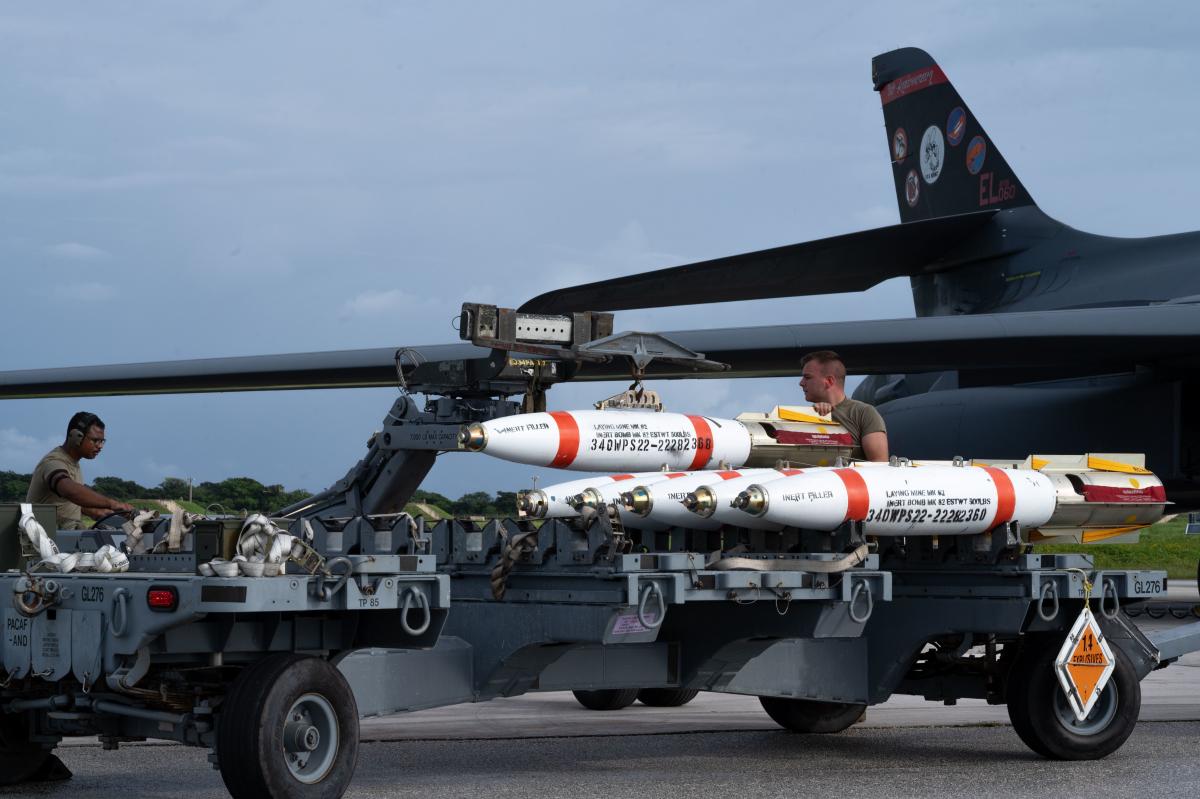
It now appears that action has been taken on the ,matter as the United States Air Force (Usaf) entered the airspace along the Benin-Nigeria border this week. Apparently, Usaf jets not only stepped up reconnaissance but also carried out a massive attack against militants, blasting their armoury.
According to military sources, a Usaf intelligence, surveillance, and reconnaissance (ISR) aircraft is currently conducting operations over Babana, a strategic border crossing between Nigeria and the Benin Republic known for militant smuggling activity. Babana has long served as a key transit route for armed groups, particularly Jama’at Nasr al-Islam wal Muslimin, who exploit the porous border to smuggle weapons and supplies into Nigeria.
Security expert, Brant Philip, confirmed the ongoing surveillance on social media, noting that Babana remains a hotspot of interest due to its proximity to Basso in Benin, which was recently targeted by armed militants. In August, the Nigerian Army had clashed with unidentified gunmen along the same axis, underlining the security volatility of the corridor.
